Fertility and Suffering
Because whoever wants to glorify fertility must also glorify the suffering inseparable from it.
On October 3, seven months pregnant, Isa will pose nude to be painted at Max Novendstern’s salon in Tribeca, alongside other performances before the artistic, intellectual, and techno crowd who gather there.
With a screening of The Cosmic Wound Part One.
Stefan, who art-directs the event, explains a mimetic mechanism related to fertility:
“Women who are mothers long for allies. They want the women around them to have children too. But as soon as they do, they become jealous of the blatant fertility these women suddenly display with their swollen bellies.
“Being pregnant, there is status in that too. And you lose that status again, the status of being this symbol of fertility, once you’ve had the child and you’re no longer pregnant.
“And they wish upon that woman that she gets to find out. The moment she gives birth and has the child in her arms, all that fertility turns into this thing that binds her, that she has to care for day and night. Immediately. She has done the hard work of pushing that child out and she doesn’t get to sleep for a day. She’s immediately changing diapers. She has a living creature that will die if she does nothing.
“When a woman is pregnant for the first time, she can’t yet be the narrator of that feeling, because she’s completely in the dark. She’s just swelling up and hoping it looks beautiful. And she has all these hormones, so she really is this goddess who cannot enjoy being a goddess. Or perhaps she can enjoy it, but she has no idea what she is the goddess of.
“And Isa is special because she understands that she cannot yet be the narrator. That is her poetic integrity. It is why she has suffered from writer’s block ever since she became pregnant.
“There is an exotic quality to the fatalism with which she submits herself to this fate, in that she resembles the Dying Gaul.
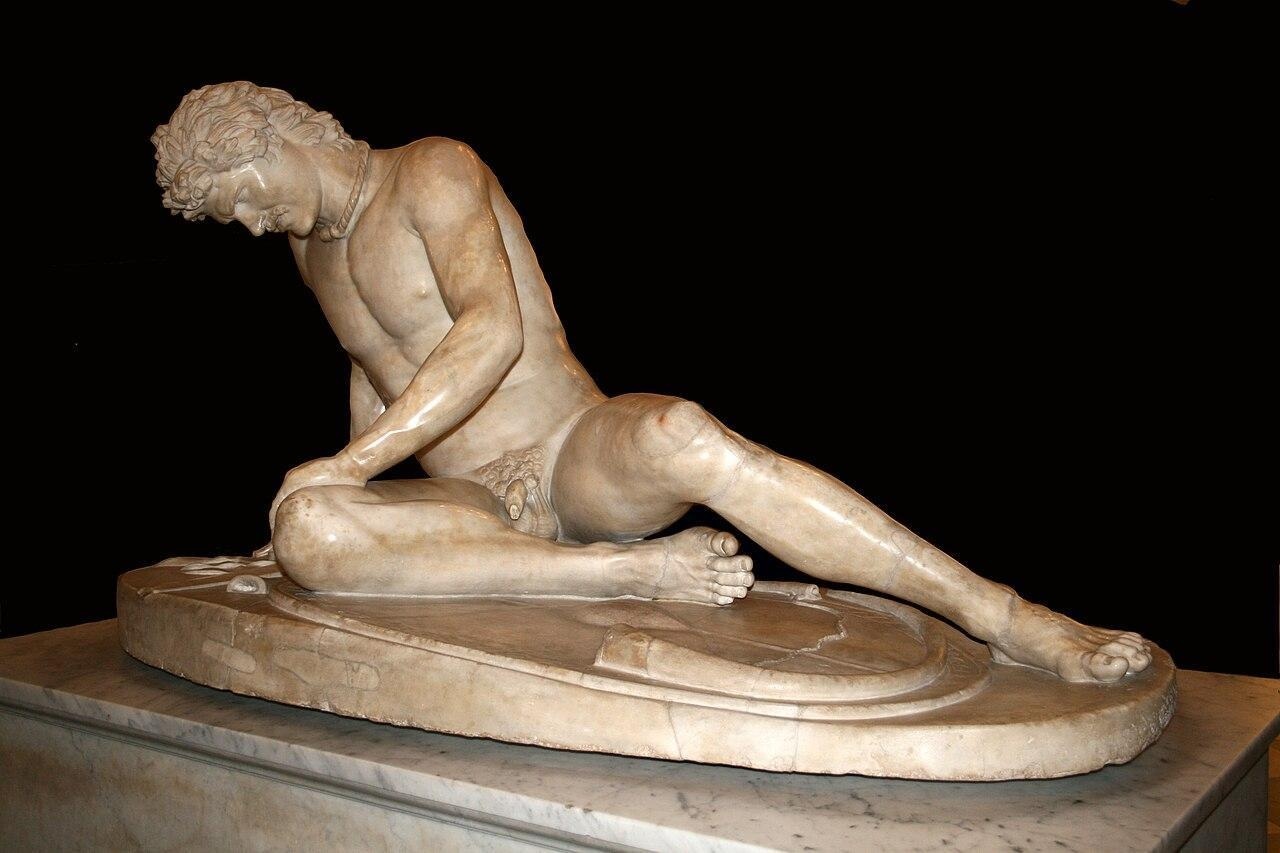
“The sculpture is beautiful because there is so much reverence in it, so much admiration for this other kind of people, this Gallic race.
“The sculpture tells us something about how we can look at Isa and her writer’s block: as something that escapes modernity at its own expense.
“And for this, we celebrate Isa. Come celebrate her with us!”